We seek to understand how ecological and evolutionary factors influence divergence and hybridization at secondary contact. By studying multiple avian systems at different stages of divergence, we can gain insight into the dynamics of divergence and consequences of introgression.
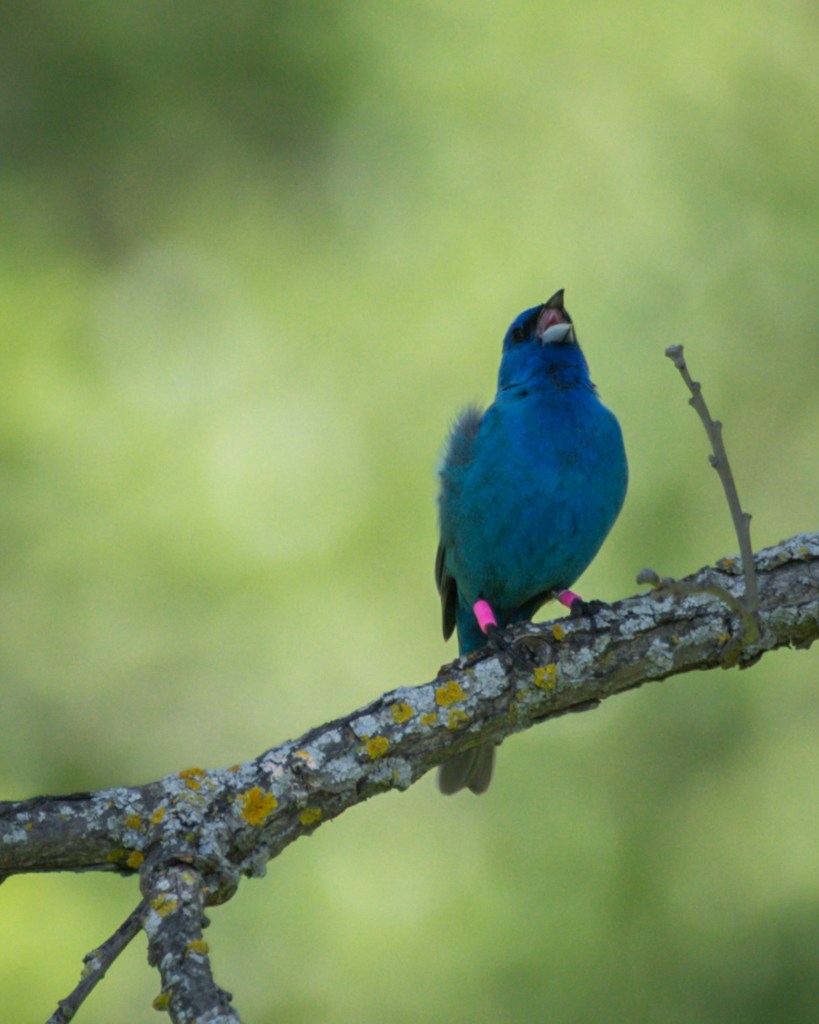
An exciting new direction for our research group is diving into the behavioral and ecological interactions of hybridizing Passerina buntings in the Great Plains. In collaboration with Drs. Matt Carling and Paul Dougherty, we are working to understand why hybridization between Indigo and Lazuli buntings occurs and determine the consequences of introgression at the individual and population level.

As an NSF postdoctoral fellow working with Dr. Al Uy at the University of Rochester I started studying the role of sex chromosomes (and neo-sex chromosomes!) in shaping hybridization and introgression in a pair of recently sympatric Myzomela honeyeaters in the Solomon Islands. By linking genomic patterns with behavioral and ecological data, I seek to understand the factors influencing speciation and drivers of biodiversity.
My PhD research with Dr. Alice Boyle focused on the influence of natural selection, especially abiotic factors such as rainfall, on the scope of sexual selection in a delightful group of birds – the Neotropical manakins (family Pipridae). I asked questions and tested predictions at the clade, species, and population level, integrating comparative, genetic, and behavioral analyses in my dissertation. Participation in the Manakin Genomics Research Coordination Network was instrumental in my development as a graduate student and continues to inspire my career.
My work with Corapipo altera is ongoing. In collaboration with Dr. Boyle and Kristen Hobbs, we have enhanced the resolution and range of our genomic sampling. This will allow us to dig deeper into the factors driving divergence between Caribbean and Pacific populations.

f
filler

